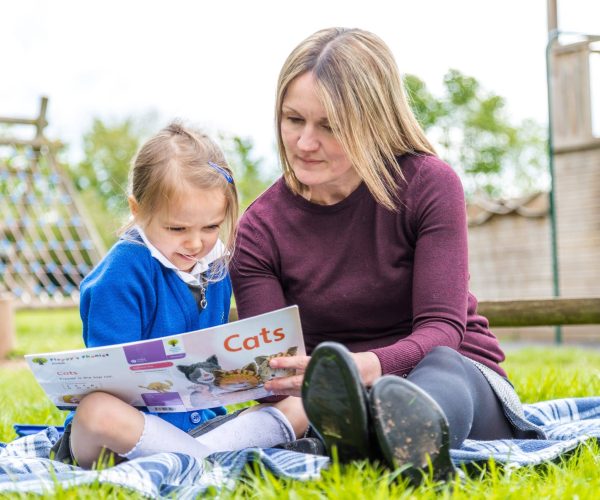
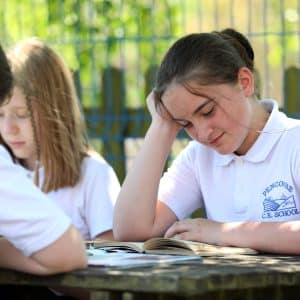
Reading is an important skill which aids learning in all curriculum areas.
We are dedicated to ensuring all children enjoy reading as well as become confident readers.
We understand the importance of creating parent partnership and have some information about how we teach reading in school and how you can support reading at home.
Reading at school –types of reading
Guided reading – reading in a small group with the teacher.
Sharing books – reading to children.
Reading opportunities in all curriculum areas and in daily routines and activities, as an integral part of the school day.
Daily phonics- Foundation Stage and KS1.
Individual reading books to take home.
Reading at Home
Establish a regular time and place for daily reading, such as before bed.
Keep a variety of reading materials available (picture books, fiction, non-fiction, chapter books, atlases, dictionaries, magazines, newspapers, join the library and visit regularly).
Make sure there is plenty of paper and writing tools in places that children can reach.
Role models – share your own experiences of books (eg. talking about favourite book) and read yourself – children will want to follow your example.
Lots of talk! Ask questions encouraging children to think and make predictions about what they are reading.
Play word games/ board games.
Involve children in reading/ writing for specific uses as well as pleasure (eg. shopping list).
Respond positively to children’s reading and writing.
Home Reading Books
Look at the front cover, back cover and pictures to engage children.
Encourage children to point to the words as they read.
Give children time and encouragement to have a go at reading independently.
If they are stuck on a word support them with reading it rather than telling them.
Make the experience interactive by asking questions about the story, the pictures and what they think of the characters – focus on comprehension as well as word decoding.
Encourage children to spot any spellings they are learning (especially tricky words which they cannot sound out e.g. the, you, was).
Useful Questions to Support & Extend
What is the title?
Who is the author? Illustrator?
What kind of book is it? (fiction/ non-fiction/ poetry etc)
Can you tell anything about the book before you start reading? How do you know?
What has happened so far?
What do you think might happen next? Why?
How would you like the story to end?
Where is the story set?
Who are the characters? Who do you like? Dislike? Why?
Advice if Reading Becomes a Challenge
Try to avoid confrontation.
Offer a different reading material (eg. magazine, internet)
Encourage reading at different times of the day/week.
Buy/borrow books on tape to listen to.
Share books with children, read aloud to them, enjoy positive attitude.